All posts by Nnedike Ugoji

10 tips on how to make slides that communicate your idea, from TED’s in-house expert

One of the skills that I chose to work on this semester was improving my presentation skills and slide design. In the past, I have been guilty of using the standard slide template, including too much text and underutilizing images. Over the course of the semester, I have been tasked with giving two presentations at work and have found ways to visually enhance my slides that have resulted in more effective presentations.

I recently came across an article on the TEDBlog that was written by Aaron Weyenberg, a UX Lead at Ted, and internally referred to as the master of slide decks. Below are 10 tips on how to make effective slides that he identified, however I have highlighted 2 tips that I found the most insightful and provided excerpts from the article.

  1. Think about your slides last. 
  2. Create a consistent look and feel. 
  3. Think about topic transitions. 
  4. With text, less is almost always more. 
  5. Use photos that enhance meaning.
  • I love using simple, punchy photos in presentations, because they help what you’re saying resonate in your audience’s mind without pulling their attention from your spoken words. Look for photos that (1) speak strongly to the concept you’re talking about and (2) aren’t compositionally complex. Your photo could be a metaphor or something more literal, but it should be clear why the audience is looking at it, and why it’s paired with what you’re saying. Below is an example of a photo I used in a deck to talk about the launch of the new TED.com. The point I was making was that a launch isn’t the end of a project—it’s the beginning of something new.

newbeginning-1

  • I found this tip to be eye-opening for me because I tend to be more literal in my presentations, so it was interesting to see how Aaron Weyenberg uses images to represent more tactical elements. For example, I am currently working on a deck outlining the new features of the upcoming relaunch of CNN.com, and instead of opening the presentation with an image from the new site, I’m planning on using a photo that represents the essence of the redesign and the impact it will have on the user.

6. Go easy on the effects and transitions.

7.  Use masking to direct attention in images.

If you want to point something out in a photo, you could use a big arrow. Or you could do what I call a dupe-and-mask. I do this a lot when showing new page designs, particularly when I don’t want the audience to see the whole design until I’m finished talking about individual components of it. Here’s the original image:
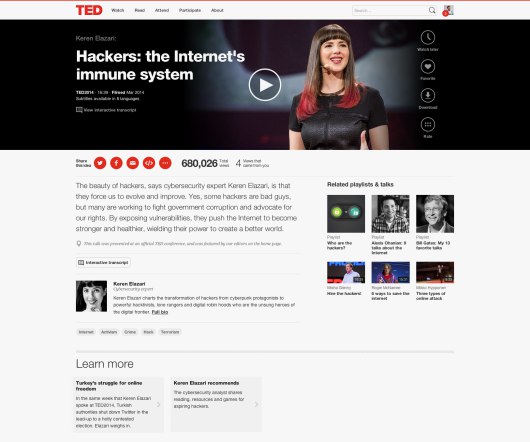
mask-11

Here’s the process for masking it. (1) Set the image transparency to something less than 100. (2) Duplicate that image so there is one directly over the top of the other. (3) Set the dup’d image transparency back to 100. and (4) Follow the technique here to mask the dup’d image. You’ll end up with something that looks like this:
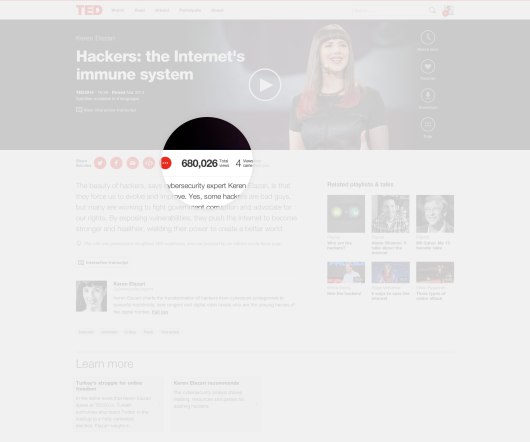
mask-31

  • I am often faced with this problem since my work is primarily focused on CNN.com, so many of my presentations include screenshots of our website. The tip above is a really great way to still show the site, but hone in on an area in a very interesting way.

8. Try panning large images.
9. For video, don’t use autoplay.
10. Reproduce simple charts and graphs.

Here’s the link to the full article where you can get the details on each tip.


5 tips on how to be an effective manager

When I came across this article on Linked-In, I was surprised by the jarring title, but appreciated the simplicity of it. Many of us have been there—had a manager that we couldn’t believe was allowed to be in a position of leading a team and thought to ourselves that if we were in their position, we would handle things so differently. Ken Sanderson, a management consultant at Swift Wind Knowledge group, recently  took a close look a management skills and identified 5 elements that we should consider in order to be a good manager.
I thought these were all pretty spot-on, but would offer up a few others as well. For example, I think it’s very important for managers to be strong communicators and  not be afraid to engage in conflict resolution. Additionally, I think it’s also very important to  establish creditability with their employees. Although managers might have the illustrious title, it’s important for them to show that they can deliver results and actually execute projects.
Do you agree with Ken’s list below? What are some other skills that you would include?

1. First and foremost – don’t be a jerk.
Treat Everyone, from cleaning staff through to executives, with utmost respect. Too many people get a position of “authority” and suddenly look down on other staff who are “lower” in the hierarchy. Not only is this wrong on a human level, it is also a serious strategic error. You have no idea what there connections may be, what influence they may have, or where they may end up being in the next year.

It also means that you should not sabotage “rivals”, step on people’s heads to advance, steal credit (or even worry about who gets credit at all), or stab people in the back. Unless you are a pirate, none of these tactics are helpful to a career or a healthy workplace.

2. Be present

You expect your employees to show up for work and put their time and energy in – so should you. Managers that demand 100% from their employees, but then turn around and take extended lunches or go “networking” on the golf course are not only insulting, they are grossly underproductive to their own organization.

Employees are not stupid. When they see this type of inconsistency, they become disengaged. Suddenly, their own contributions to the organization mandate begins to lose its meaning as well as their sense of being appreciated.

Being present is also more than just being in the office. It means being there for your employees. My office door is never closed except for when an employee needs to have a private discussion. A manager’s primary responsibility is to guide and support their staff; thus, the manager must be available to them.

3. Lead by Inspiration, not fear

Antiquated notions of an aggressive leader striking fear and awe into his/her employees are just that… antiquated. They never achieved anything more than obedience and compliance. Staff under that type of leadership did their hours and the minimum required to comply with their duties. Such workplaces never achieve greatness, nor any true productivity.

A good manager leads, instead, by inspiration. To do this a manager needs to include staff in planning, sincerely consider staff ideas and opinions, and help staff see how their contributions connect to the greater picture of the organization’s mandate and directions. They need to see how they are meaningful to the organization.

Might there be performance issues at some point? perhaps, but then that is what performance management systems are for. However, in my experience, engaged employees tend to put in extra time rather than sluff off.

4. Be Open

Managers often think that they are doing staff a favour by holding back certain information (for example, there may be contemplation by senior management about reorganizing a specific team of staff). This could not be further from the truth. Staff ALWAYS find out about considerations or plans – but without you discussing it with them, they are left with wild speculation and fear.

A good manager understands that he/she has a TEAM he/she is managing, not children to coddle. When they know that you communicate with them and that you are there to support them in whatever way possible, you drive up engagement and the true sense of a team.

5. Manage, don’t micromanage!

Far too many managers think they are geniuses. Let’s face the facts here, if you are a manager, you are NOT a genius. You are no smarter than the people you are managing – you just have a different set of skills.

It is the mistaken belief by a poor manager, that they are smarter than their staff. This belief causes many to interfere with the work that should be assigned to their staff. Even worse are those who may have been the best widget maker previously. They have a tendency to interfere all the time – believing that everyone should operate exactly how they did and achieve exactly the same level of results they did.

All of these notions are wrong. First, it is no longer the role of a manager to do all the work. They are supposed to be guiding their staff, supporting them and taking on the tasks of planning. If they are busy doing their staff’s work, they have no time for the actual work they are hired for.

Furthermore, many of these managers have no trust in their employees and so they either criticize unceasingly their staff’s work or do it themselves. To be a good manager, you need to trust your employees and their skills. Give them the tasks to do, let them find their own most productive way of doing it and support them training or whatever else they may need help them gain more and better skill sets.

One caveat to all of this is that you need to get to know your employees and their characters. Some will thrive better under slightly more supervision while others may thrive better under minimal supervision. You need to understand these character differences in order to provide the best management possible for staff to succeed.

Regardless of how much or how little supervision an employee will thrive under, manager’s should not be taking over their work. Nor should managers pretend to know everything their staff knows. Seek out their opinions on issues, involve them in planning or decision making – let them know that you value their expertise. You may not always opt for their recommended decision, but at least you are showing them that you value them enough to seriously consider it.

Link to article


Applying Business Intelligence: The Power of Business Resource Groups

Business Resource Groups, often also referred to as Affinity or Ethnic Resource groups, are an important component of organizations. For those of you who aren’t as familiar, business resource groups are typically composed of a group of employees who share a commonality (e.g. race, gender, sexual orientation, age etc….) Ten years ago, corporate diversity was seen more as a good thing to have, but not as a necessity for corporate growth. Leaders often categorized business diversity initiatives with corporate giving and office philanthropy.

Today, company executives now realize that in order to survive and succeed in today’s competitive business environment, they have to bring diversity to the forefront of the company. The top executives and the employees have come to the realization that the introduction of different voices, with different perspectives, backgrounds, priorities and orientations will help identify opportunities that will yield success in new markets.  Here is an example of how one company applied this business intelligence, and saved $100 million in market research fees using its company’s business resource groups. Resource Groups & Marketing: DiversityInc Innovation Fest

Does your organization have business resource groups? If so, have they been used to help drive business results?

Source: Resource Groups 101: A Primer on Starting Them & Using Them for Business Goals