Oftentimes, we equate ‘problem solving’ with ‘critical thinking.’ However, in this case we’re referring to ‘problem solving’ as a method for finding solutions to short-term complications or setbacks. Although strong intuition is important for problem solving, you must also rely on the research and data that you encounter. What is most important is what you do with that combination of intuition and research. Here are the five steps to becoming a better problem solver:
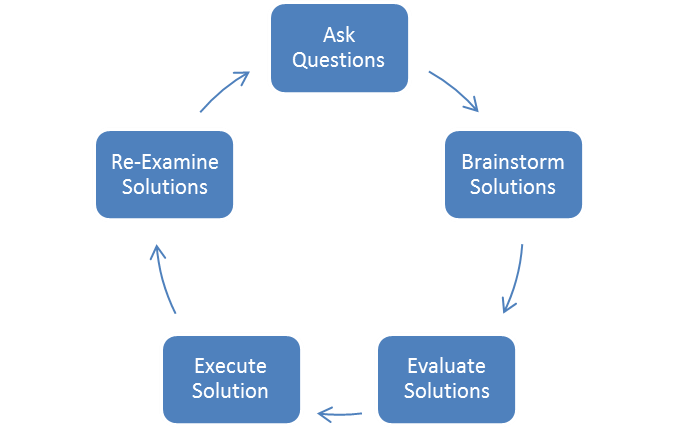
- Ask a lot of questions to identify the underlying problem. Don’t jump to conclusions.
- Brainstorm all of the possible solutions to the problem that you identified.
- Evaluate the solutions that you came up with. Determine the feasibility of those ideas.
- Execute the most feasible idea. Good problem solvers are responsible for implementing a solution.
- Re-evaluate the project throughout its execution. Sometimes you will find out that you are either not solving the underlying problem or there are more problems that need to be solved.
For more information on the myths and facts of problem solving, feel free to visit the link below. This process can be applied in any business setting. By practicing these skills over-and-over, you can become a better problem solver.
I have found that asking questions is one of the most important things you can do when trying help someone else resolve an issue. Before I ever make a suggestion about how to proceed or what needs to be updated/modified, I try ask no less than 10 questions. It surprising how often by asking questions, the other party either realizes their mistake or concludes their “issue” actually isn’t an issue. Also, a lot of times the issue that was initially raised is just a symptom of an underlying larger problem that can only be discovered by asking lots of the correct questions.