Tag Archives: Do It Live

Tricks to Giving Phone Presentations

conference-phone

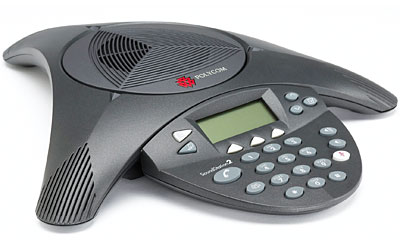
Being a great presenter is a great skill to have in front of a live audience.  However, the reality of large national and international corporations is that creating a live in-person audience is often impractical and costly. Technology has been making speaking to a physically absent audience more realistic with teleconferencing, video conferencing, and the like. However, an effective presenter also needs to have a great presence over the phone and through video conferencing equipment. The skill set is obviously similar, but here are some tips for nailing that presentation on your next conference call or video conference (which I have filtered and summarized below).

  • Check in to solicit comments or verbal acknowledgement that the audience is still with you. You may have lost the audience 10 minutes ago, and you don’t even know it.
  • Master the silence. Silence can be okay as long as it is not too long. Over the phone, it can still be used for dramatic effect.
  • Go around the horn to check in on different audience members to see that they are still following along. For instance, call someone out who you know should be listening, i.e. “Are there any questions from the Atlanta office?”
  • Don’t over answer questions. It is possible that a large portion of the audience already knows the answer and has decided to tune you out because you spent 5 minutes answering the question from the new guy who needs individual attention later.
  • Send out visuals beforehand. The addendum to the call should be sent in advance of the call to all attendees. Don’t forget page numbers and reference them in your call so the audience knows where you are.
  • Don’t read off the slides. Unlike a live presentation, the audience already has your slide deck and has probably looked ahead because you were supposed to send them the slides and exhibits before the call. Add color. Make it lively. Add value to the listeners. Keep the audience awake with a funny anecdote or an example that they couldn’t find using Google.
  • Remember to practice. Depending on the format, you may be tempted to write down what you are going to say and read it on the call. The audience can tell when something is scripted. Instead of sounding polished, you sound like an actor reading over his lines in a read-through. This is not a dress rehearsal – this is the real thing!

BIG cell phone

Inspiration:

http://blog.teamthinklabs.com/index.php/2011/12/21/7-tips-for-presenting-over-the-phone/

http://www.threetraining.com/three-tricks-to-powerful-phone-presenting/

http://brainzooming.com/7-tips-to-improve-conference-call-presentations/952/

Storytelling Tips for Success

  • Don’t be afraid to show your vulnerable side.

Tell about your struggles or (mild) embarrassments. The audience will identify with a speaker who isn’t afraid to be self-deprecating. The audience will think you are more credible if they can relate to your failures. Ronald Reagan (see below) has told stories of walking down the street in a foreign country to explain to the audience what the people there are like. No one is perfect and the audience knows you aren’t either. As I stated in my previous post, the audience is rooting for you to succeed. If you portray yourself as an underdog, it will be even easier for them to like you because everyone likes rooting for an underdog.

Reagan’s Storytelling at its Finest

  • Make the audience feel like they were there.

Most importantly, it is better if you are telling a story that is actually true or that is nearly true. The purpose of the story is to set the stage for what the experience was like. Before television and movies, humans told other humans what happened in their lives by describing it to each other as if the other person was there. Use a lot of descriptive words. Set the mood. What was going through your mind as the events unfolded? As social media and other forms of instant, abbreviated content fills our minds and worlds (think texting, BuzzFeed articles, Instagram, snapchats, etc.), it will become increasingly important to be able to tell another person or group of people about an experience in a genuine human way.

  • Start with the end in mind.

The point of the story is not to entertain the audience. The purpose is for the audience to remember what you are trying to tell them. The medium of a story is easier for people to remember. It is ingrained in us from our prehistoric ancestors. They convinced people to do things based on stories and emotion, not with powerpoint slideshows or colorful charts and graphs. Make sure you the story brings you to the point and helps you drive it home. The story will make the audience much more likely to remember the presentation, and a good overall goal would have an audience member be able to convey it to someone who wasn’t even there by telling your story and relating it to the overall message. Of course practice is important. Professionals at the Advanced Publix Speaking Institute recommend practicing 30 times. TED presenter Dr. Jill Bolte-Taylor says she rehearsed her presentation 200 times before delivering it. What should I do if I don’t have time to practice it that many times? You should do the best you can and practice it as many times as you think you need to be successful. However, at some point you can sound over-rehearsed and you should just “do it live” for more authenticity.

Do it Live

Inspiration: http://www.gingerpublicspeaking.com/storytelling-public-speaking http://www.public-speaking.org/public-speaking-storydo-article.htm